- Home
- Latest News
- Insights
- Ring-Fence, Mobilise, Deliver: The TVET CIEG Blueprint
Ring-Fence, Mobilise, Deliver: The TVET CIEG Blueprint
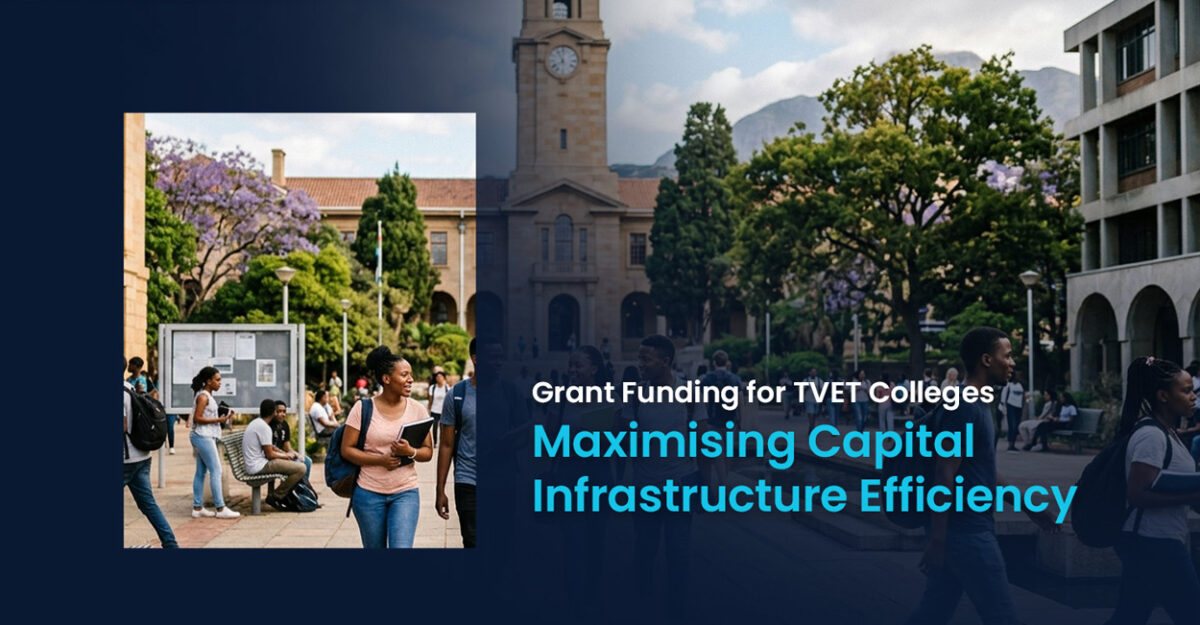
Maximising Capital Infrastructure Efficiency Grant (CIEG) Impact in TVET Colleges

Think of CIEG as more than a line item; but rather a promise to every learner. Here’s a practical blueprint to de-risk procurement, tighten governance and accelerate delivery so TVET colleges convert every rand into safer, smarter, compliant infrastructure.
Author: Vela Mtshali, CEO of Bonakude
The Capital Infrastructure Efficiency Grant (CIEG) was created to expand and maintain the infrastructure that underpins quality teaching and learning in South Africa’s Technical and Vocational Education and Training (TVET) colleges. It funds workshops, laboratories, student accommodation, and the services that make campuses safe and inclusive. When managed well, CIEG delivers visible improvements where it matters most: on campus, for students.
Why CIEG Exists — And What That Means in Practice
CIEG is anchored in the Continuing Education and Training Act and the National Norms and Standards for Funding for TVET Colleges.
Practically, up to 10% of CIEG funding must support disability compliance. Accessibility is not a “nice to have”; it is a statutory obligation and a core design principle.
Since the 2018/19 financial year, more than R3.7 billion has flowed into TVET maintenance and repairs through CIEG. The question every Principal and CFO must ask is simple:
Are we converting allocation into visible infrastructure improvements, airtight compliance, and measurable delivery — at pace?
Five Controls That Separate Success from Struggle
- Ring-fence the money. Treat CIEG as the conditional grant it is: a separate bank account, exclusive use for infrastructure maintenance and repair, and quarterly reporting to DHET in the required format. It’s simple, but this is where many derail.
- Put a named project manager in the seat. Appoint (and empower) a level-9 PM or service provider with clear deliverables tied to the grant schedule.
- Prioritise correctly. Focus spend on bulk services, statutory compliance, sanitation, building repairs and student accommodation repairs. That’s the core of campus readiness and student dignity.
- Lock in procurement capacity early. Use special bid committees and pre-qualified contractor panels, and where appropriate, leverage PURCO frameworks for speed with compliance.
- Make records your second line of defence. Keep every bill of quantities, site photos, progress certificates and change approvals. Too many reports fail for missing BOQs or incomplete project lists.
The Real Blockers — And How to Overcome Them
Procurement timelines stretch. Teams are thin. Maintenance plans are outdated or absent. ICT strategies don’t guide 4IR-relevant purchases. These are not mysteries; they are management problems with management answers. Start with a 12-month CIEG calendar (needs analysis → specs → tender → award → execution → close-out → quarterly reporting). Pair it with a one-page controls map that assigns an owner and an artefact to each condition (bank proof, PM appointment, reporting template, site inspection schedule).
Then tackle asset integrity: align maintenance work to a GRAP-sound fixed-asset register (FAR) that evidences condition, impairment and lifecycle plans. This is where “effective asset management” shifts from slogan to saved rands; fewer surprises, lower UIFW (unauthorised, irregular, fruitless and wasteful) risks, and better audit outcomes.
Learn more about Bonakude’s Consulting Services and our approach to infrastructure governance and audit turnaround.
What Good Looks Like in the Next 90 Days
- Week 1–2: Ring-fence funds; confirm PM and bid committee schedules; adopt the CIEG controls map.
- Week 3–4: Approve a campus-level maintenance plan; confirm priority projects and disability-compliance scope (≤10% of allocation, used smartly).
- Week 5–8: Issue specs; stand up contractor panels or PURCO routes; validate BOQs and cost reasonableness upfront.
- Week 9–12: Break ground; implement a simple digital log (grant register + photo diary + change control + vendor scorecards); publish your first quarterly report.
Why This Matters
Every day lost to process is a day students learn in unfit spaces. CIEG is our chance to convert rands into real outcomes: safe labs, compliant residences, reliable bulk services, and the dignity and performance that follow. If we ring-fence, mobilise capacity and manage assets deliberately, the grant will do what it was designed to do.
Vela Mtshali CA(SA), RA is CEO of Bonakude.
He brings over 26 years’ experience in accounting, auditing and consulting, with deep expertise in public-sector finance, infrastructure governance, and audit-turnaround leadership.
Frequently Asked Questions (FAQs)
What is the purpose of the Capital Infrastructure Efficiency Grant (CIEG)?
The Capital Infrastructure Efficiency Grant (CIEG) funds maintenance, repairs and infrastructure upgrades at South Africa’s TVET colleges. It ensures that workshops, laboratories, student accommodation and core campus services remain safe, compliant and conducive to quality teaching and learning.
Is CIEG a conditional grant?
Yes. CIEG is a conditional grant governed by the Continuing Education and Training Act and the National Norms and Standards for Funding for TVET Colleges. Funds must be ring-fenced and used strictly for approved infrastructure maintenance and repair purposes, with quarterly reporting to DHET.
How much of CIEG must be allocated to disability compliance?
Up to 10% of CIEG funding must support disability compliance initiatives. This includes accessibility upgrades such as ramps, compliant ablution facilities, signage, and inclusive infrastructure improvements.
Can CIEG funds be used for new buildings?
CIEG primarily supports maintenance, refurbishment and repair of existing infrastructure. New capital expansion projects are generally funded through separate infrastructure allocations unless specifically approved within the grant framework.
What are the most common compliance risks associated with CIEG?
Common risks include failure to ring-fence funds, incomplete reporting to DHET, missing bills of quantities (BOQs), weak procurement documentation, and lack of a GRAP-compliant fixed asset register. These issues often lead to audit findings and UIFW (unauthorised, irregular, fruitless and wasteful) expenditure risks.
What documentation should colleges retain for audit purposes?
Colleges should maintain complete records including:
- Approved maintenance plans
- Procurement documentation and bid committee minutes
- Bills of quantities (BOQs)
- Site inspection reports and photographs
- Progress certificates and payment approvals
- Quarterly DHET submission reports
How can institutions accelerate procurement without compromising compliance?
Institutions can establish pre-qualified contractor panels, schedule bid committees early, and leverage frameworks such as PURCO where appropriate. Planning procurement cycles within a 12-month CIEG calendar reduces delays and improves delivery pace.
How does CIEG support better audit outcomes?
When properly managed, CIEG strengthens infrastructure governance, improves asset management, reduces emergency repairs, and lowers UIFW exposure. Strong controls, complete documentation and aligned fixed asset registers contribute directly to improved audit outcomes.
What does effective CIEG management look like?
Effective management includes ring-fenced funding, a named and empowered project manager, a campus-level maintenance plan, procurement readiness, digital grant tracking, and timely quarterly reporting. Institutions that implement these controls convert allocations into visible campus improvements.
How can Bonakude assist with CIEG compliance and optimisation?
Bonakude provides public-sector advisory services, including infrastructure governance frameworks, GRAP-compliant asset register alignment, audit-readiness reviews, procurement support, and turnaround strategies to maximise CIEG impact while strengthening compliance.